Year 1 Spelling Words PDF: A Comprehensive Guide
Discover essential Year 1 spelling resources, including downloadable PDF lists from Twinkl and East Bridgford St Peters. Access weekly word sets,
common exception words, and phonics-focused practice for effective learning!
Embarking on the journey of spelling in Year 1 is a pivotal step in a child’s literacy development. This year focuses on building a foundational understanding of phonics and applying it to written words. Utilizing resources like downloadable PDF spelling lists – readily available from sources such as Twinkl and East Bridgford St Peters Church of England Academy – provides structured practice.
These lists often categorize words by week (Autumn 1, Week 1-6, for example) and term, ensuring a progressive learning curve. Initial focus areas include mastering sounds like ‘f’, ‘l’, ‘s’, and ‘z’, often represented as ‘ff’, ‘ll’, ‘ss’, and ‘zz’. Furthermore, children begin to explore digraphs and trigraphs like ‘ck’, ‘ay’, ‘ou’, and ‘ie’, alongside vowel teams such as ‘ea’, ‘oy’, ‘ir’, and ‘ue’. Consistent practice with high-frequency words is also crucial.
Understanding the Importance of Spelling in Year 1
Effective spelling skills in Year 1 are fundamental, extending far beyond simply writing words correctly. Strong spelling supports reading comprehension, as children readily recognize words, boosting fluency. Utilizing PDF resources, like those from Twinkl and East Bridgford St Peters, provides targeted practice with common exception words – ‘the’, ‘a’, ‘do’, ‘to’ – and phonically regular words.
Mastering these early words builds confidence and encourages writing attempts. Furthermore, understanding spelling patterns – initial sounds, digraphs, vowel teams – enhances decoding skills. Consistent practice, employing techniques like ‘Look, Say, Cover, Write, Check’, reinforces learning. Access to structured lists, categorized by term (Autumn, Spring, Summer), ensures a progressive and manageable learning experience. Ultimately, solid Year 1 spelling lays the groundwork for future literacy success.
Common Year 1 Spelling Challenges
Year 1 pupils often struggle with common exception words – those not easily decoded phonetically, like ‘said’ and ‘they’. PDF resources highlighting these ‘sight words’ are crucial for memorization. Another challenge lies in applying phonics rules consistently; for example, differentiating between ‘ar’, ‘er’, and ‘ir’ sounds.
Homophones (words sounding alike, like ‘to’ and ‘too’) present confusion, requiring explicit teaching. Silent ‘e’ patterns and their exceptions also pose difficulties. Furthermore, correctly spelling words with digraphs (ck, ay, ou) and trigraphs requires practice. Utilizing term-based spelling lists (Autumn, Spring, Summer) can help address these challenges systematically. Resources from Twinkl and East Bridgford St Peters offer targeted support, alongside activities like ‘Look, Say, Write’ to reinforce learning.

Key Spelling Lists & Resources
Explore curated Year 1 spelling lists in PDF format from Twinkl and East Bridgford St Peters. Find resources covering weekly sets and common exception words!
Twinkl Resources for Year 1 Spelling
Twinkl provides a vast library of engaging and comprehensive resources designed to support Year 1 spelling development. Access a wide range of downloadable PDFs, including tailored spelling lists aligned with the national curriculum. These lists are often categorized by week, term, or specific phonics focus, such as initial sounds (ff, ll, ss, zz) or digraphs (ck, ay, ou, ie).
Furthermore, Twinkl offers interactive activities like ‘Look, Say, Cover, Write, Check’ worksheets, ‘Say and Trace’ exercises, and ‘Look and Say, Look, Say and Write’ tasks. These resources cater to diverse learning styles and help reinforce spelling patterns and high-frequency words. Visit twinkl.com to explore their extensive collection and find materials suitable for classroom or home learning, supporting a strong foundation in early literacy.
East Bridgford St Peters Church of England Academy Spelling Lists
East Bridgford St Peters Church of England Academy offers readily available Year 1 spelling lists in PDF format, providing a structured approach to learning. These lists are organized by term – Autumn 1, Autumn 2, Spring 2, and Summer 1 & 2 – ensuring progressive skill development. The academy’s resources cover essential areas like common exception words (the, a, do, to, said) and foundational phonics, including initial sounds and digraphs.
These downloadable PDFs are particularly useful for parents and educators seeking targeted practice materials. They include key words like ‘friend’, ‘school’, ‘push’, ‘pull’, and ‘house’, alongside core spelling patterns. Accessing these lists allows for consistent reinforcement of spelling concepts, supporting children in building confidence and accuracy in their writing;
New Curriculum Spelling Lists for Years 1 & 2
The new curriculum spelling lists for Years 1 & 2, often available as downloadable PDFs, emphasize a progressive learning approach. These lists focus on high-frequency words like “the,” “a,” “do,” “to,” “today,” “of,” “said,” “says,” and “your,” crucial for early reading and writing fluency. They also incorporate pronouns (“he,” “she,” “me,” “we”) and number words (“one,” “once”).
PDF resources derived from these lists facilitate structured practice, aiding children in mastering common exception words. Furthermore, they align with phonics instruction, reinforcing letter-sound correspondences. Utilizing these lists, alongside resources from sites like Twinkl, provides a comprehensive foundation for spelling success, building confidence and accuracy in young learners.

Phonics and Spelling Patterns
Explore key phonics patterns like initial sounds (f, l, s, z), digraphs (ck, ay, ou, ie), and vowel teams (ea, oy, ir, ue) within Year 1 PDFs.
Focus on Initial Sounds: f, l, s, and z (ff, ll, ss, zz)
Mastering initial sounds is foundational for Year 1 spelling success, and readily available PDFs emphasize this crucial skill. Children begin by recognizing and applying single-letter sounds – f, l, s, and z – in simple words.
Progressing from these, the focus shifts to digraphs: ‘ff’ for the sound /f/, ‘ll’ for /l/, ‘ss’ for /s/, and ‘zz’ for /z/. These are often introduced together, allowing students to compare and contrast.
PDF resources provide targeted practice, including worksheets and activities designed to reinforce the correct spelling of words utilizing these sounds. Examples include ‘fluff’, ‘bell’, ‘mess’, and ‘buzz’. Consistent practice with these initial sounds and digraphs builds a strong phonetic base for more complex spelling patterns later on.
Digraphs and Trigraphs: ck, ay, ou, ie
Building upon initial sound knowledge, Year 1 spelling PDFs introduce digraphs and trigraphs, expanding phonetic awareness. Digraphs like ‘ck’ representing /k/ are key, as seen in words like ‘sock’ and ‘tick’.
Vowel digraphs are also central: ‘ay’ making the /ay/ sound (day, play), ‘ou’ with its varied pronunciations (out, shout), and ‘ie’ typically sounding like /ee/ (tie, pie).
PDF resources offer focused practice on these combinations, often including picture matching, fill-in-the-blank exercises, and word building activities. Understanding these patterns is vital for decoding and encoding words. Consistent exposure and practice, facilitated by downloadable PDFs, solidify these crucial spelling skills, preparing students for more complex phonetic concepts.
Vowel Teams: ea, oy, ir, ue
Year 1 spelling PDFs increasingly feature vowel teams, where two vowels work together to create a single sound. ‘ea’ commonly makes the long /ee/ sound (sea, eat), though exceptions exist. ‘oy’ consistently produces the /oy/ sound (boy, toy), offering reliable practice.
The ‘ir’ team typically sounds like /er/ (girl, bird), while ‘ue’ often creates the /oo/ sound (blue, clue). Downloadable resources provide targeted exercises, focusing on recognizing these patterns in words and applying them in writing.
PDF worksheets often include sorting activities, sentence completion, and word searches to reinforce learning; Mastering vowel teams is crucial for fluent reading and accurate spelling, building a strong foundation for future literacy development.
High-Frequency Words (Common Exception Words)
Essential Year 1 PDFs prioritize high-frequency words like ‘the’, ‘a’, ‘do’, and ‘said’. Practice pronouns (‘he’, ‘she’, ‘we’) and number words (‘one’, ‘once’) for fluency.
Essential Sight Words: the, a, do, to, today, of, said, says, your
Mastering these high-frequency words is crucial for Year 1 reading and writing success. Downloadable PDF resources emphasize repeated exposure to words like ‘the’, ‘a’, ‘do’, ‘to’, ‘today’, and ‘of’. Focus on recognizing these words instantly, as they frequently appear in early texts.
Practice using ‘said’ and ‘says’ correctly, noting the slight variation. The word ‘your’ requires attention to possessive forms. Utilize flashcards and sentence-building exercises to reinforce learning. Twinkl provides excellent printable materials for targeted practice. Remember, consistent review is key to building confidence and fluency with these essential sight words, forming a strong foundation for future literacy skills. These words are often included in weekly spelling lists and assessments.
Pronoun Practice: he, she, me, we
Developing a strong understanding of pronouns – ‘he’, ‘she’, ‘me’, and ‘we’ – is vital for Year 1 students. PDF resources often incorporate activities focused on replacing nouns with these pronouns in sentences. Emphasize correct usage in both writing and speaking.
Practice identifying the pronoun that correctly refers to a specific person. Utilize worksheets and games to make learning engaging. Focus on differentiating between ‘me’ and ‘I’, a common challenge. Twinkl offers printable pronoun exercises. Remember, mastering pronouns improves sentence fluency and avoids repetitive language. Consistent practice, using varied examples, will solidify their understanding and build confidence in using these essential grammatical tools.
Number Words: one, once
Integrating number words like ‘one’ and ‘once’ into Year 1 spelling practice is crucial for literacy and numeracy connections. PDF resources frequently include exercises where children spell these words and use them in simple sentences. Focus on understanding the difference in their meanings and applications.
Practice writing sentences like “I have one apple” or “I went to the park once this week.” Utilize visual aids and counting activities to reinforce the concept of ‘one’. Emphasize that ‘once’ indicates a single occasion. Twinkl provides worksheets combining number recognition with spelling. Consistent repetition and contextual usage will help children confidently spell and apply these foundational number words.

Spelling Practice Techniques
Explore effective methods like Look, Say, Cover, Write, Check, Say and Trace, and Look and Say/Write exercises. Downloadable PDF worksheets support these techniques for Year 1 learners!
Look, Say, Cover, Write, Check Method
The Look, Say, Cover, Write, Check method is a cornerstone of Year 1 spelling practice, readily supported by downloadable PDF resources. First, look carefully at the word, noting its shape and letter order. Then, say the word aloud, sounding out each phoneme. Next, cover the word, and attempt to write it from memory.
Finally, check your spelling against the original word, identifying any errors. Repeat this process several times for each word, reinforcing memory and accuracy. PDF spelling lists from sources like Twinkl provide ideal words for this technique. This method is particularly effective for high-frequency words and common exception words, building confidence and fluency in young spellers. Consistent practice with this technique, using readily available PDF materials, yields significant improvements.
Say and Trace Activities
Say and Trace activities offer a multi-sensory approach to Year 1 spelling, perfectly complemented by printable PDF worksheets. Children say the target word aloud, emphasizing each sound, then trace over the letters with their finger or a pencil. This kinesthetic element reinforces letter formation and sound-letter correspondence.
PDF resources often include pre-written words for tracing, or blank templates for customized practice. Following tracing, encourage children to write the word independently. This builds muscle memory and solidifies spelling patterns. Resources like those from Twinkl provide varied Say and Trace exercises. This method is especially beneficial for learners who benefit from tactile learning, enhancing retention and spelling accuracy when paired with downloadable PDF lists.
Look and Say, Look, Say and Write Exercises
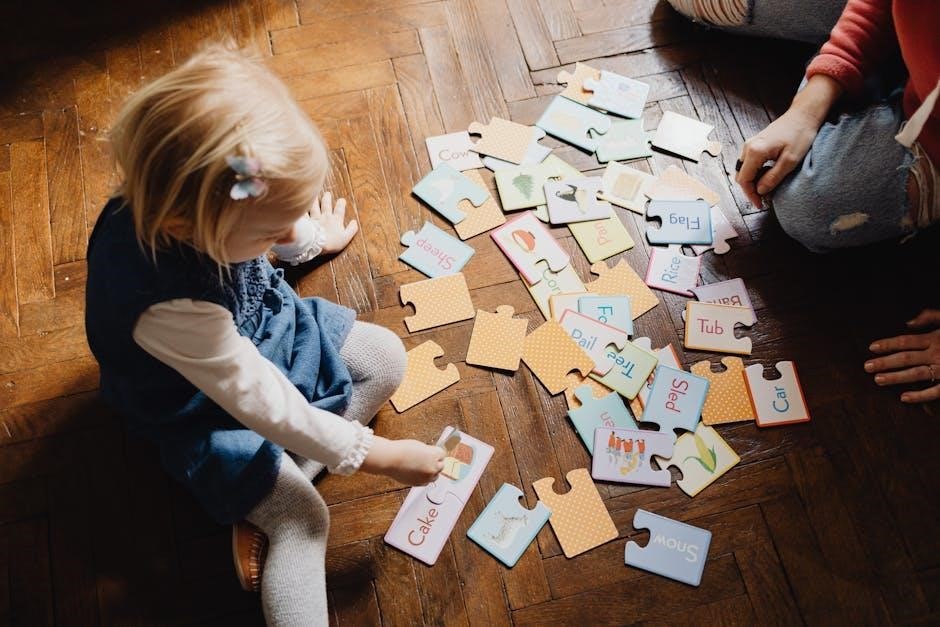
Look and Say exercises, readily available in Year 1 spelling PDF resources, build memory and phonetic awareness. Children first look at the word, then say it aloud, breaking it down into individual sounds. The progression to Look, Say, and Write adds a crucial step: independent recall and transcription.
PDF worksheets often present words visually, prompting students to vocalize and then recreate them. This method reinforces the connection between visual representation, auditory pronunciation, and motor skills. Resources from sites like Twinkl offer structured exercises. Consistent practice with these techniques, utilizing downloadable lists, strengthens spelling skills and builds confidence in young learners, fostering a solid foundation in literacy.

Specific Word Lists by Term
Explore organized Year 1 spelling lists categorized by school term – Autumn, Spring, and Summer – in convenient PDF format. Download weekly sets for focused practice!
Autumn 1 Spelling Lists: Week 1-6
Begin the year with focused spelling practice! Autumn 1’s Week 1-6 lists build foundational skills. Focus on initial sounds like ‘f’, ‘l’, ‘s’, and ‘z’, practicing spellings such as ‘ff’, ‘ll’, ‘ss’, and ‘zz’.
Introduce digraphs and trigraphs like ‘ck’, ‘ay’, ‘ou’, and ‘ie’ through targeted word lists. Reinforce learning with common exception words: ‘the’, ‘a’, ‘do’, ‘to’, ‘today’, and ‘of’.
Utilize resources like Twinkl and East Bridgford St Peters’ Academy lists for comprehensive coverage. Review Reception spellings to solidify prior knowledge. Practice with words like ‘he’, ‘she’, ‘me’, ‘we’, and number words ‘one’, ‘once’. Download PDF lists for convenient at-home practice and consistent skill development.
Autumn 2 Spelling Lists
Transition into Autumn 2 with expanded spelling challenges! Continue reinforcing initial sounds and introduce more complex phonics patterns. Focus on vowel teams like ‘ea’, ‘oy’, ‘ir’, and ‘ue’ to broaden phonetic awareness.
Expand common exception word knowledge with ‘said’, ‘says’, ‘your’, ‘they’, and ‘be’. Incorporate pronoun practice with ‘he’, ‘she’, ‘me’, and ‘we’ to build grammatical understanding. Utilize the Year 1 Spelling and Reading Words Autumn 2 PDF for structured learning.
Introduce high-frequency words like ‘no’, ‘come’, ‘some’, and ‘ask’ for improved reading fluency. Supplement learning with engaging activities like ‘Look, Say, Cover, Write, Check’. Download comprehensive lists from Twinkl for varied practice and consistent skill reinforcement.
Spring 2 Spelling Lists
Embrace Spring 2 with focused spelling practice! Review and consolidate Autumn term learning, building a strong foundation. Introduce more digraphs and trigraphs, like ‘ck’, ‘ay’, ‘ou’, and ‘ie’, for advanced phonetic skills.
Expand high-frequency word recognition with ‘friend’, ‘school’, ‘push’, and ‘pull’. Practice number words like ‘one’ and ‘once’ to integrate math and literacy. Utilize the Year 1 Spelling and Reading Words Spring 2 PDF for targeted exercises.
Incorporate ‘Say and Trace’ activities to enhance muscle memory and spelling accuracy. Download resources from Twinkl to access diverse spelling lists and engaging games. Reinforce learning with ‘Look and Say, Look, Say and Write’ exercises for comprehensive skill development.
Summer 1 & 2 Spelling Lists
Transition into Summer with comprehensive spelling lists designed for Year 1 students! Focus on reinforcing previously learned phonics patterns, including vowel teams like ‘ea’, ‘oy’, ‘ir’, and ‘ue’. Utilize the Year 1 Spelling and Reading Words Summer 1 & 2 PDFs for structured practice.
Expand vocabulary with common exception words such as ‘the’, ‘a’, ‘do’, ‘to’, and ‘said’. Introduce pronouns like ‘he’, ‘she’, ‘me’, and ‘we’ for sentence construction. Practice with words like ‘house’, ‘by’, and ‘was’ to build fluency.
Employ the ‘Look, Say, Cover, Write, Check’ method for effective memorization. Supplement learning with Twinkl resources offering interactive spelling games and activities. Review Reception/Year 1 spellings to solidify foundational skills throughout the summer months.

Advanced Spelling Concepts
Explore homophones, silent ‘e’ rules, and ‘r’ influenced vowels (ar, er, ir) to deepen Year 1 spelling understanding. Utilize focused practice for mastery!
Homophones: Understanding Words That Sound Alike
Introduce Year 1 students to the fascinating, yet sometimes tricky, world of homophones – words that share the same pronunciation but possess distinct meanings and spellings. Recognizing these can significantly improve both reading comprehension and accurate spelling skills. Common examples include ‘to’, ‘too’, and ‘two’; ‘there’, ‘their’, and ‘they’re’; and ‘see’ and ‘sea’.
Engage children with activities that require them to choose the correct homophone in a sentence, or to create their own sentences demonstrating understanding. Utilize visual aids and real-life contexts to reinforce the differences. Emphasize that while they sound the same, the spelling reveals the intended meaning. Practice with lists and games will build confidence and fluency in using these often-confused words correctly.
Silent ‘e’ Revision and Exceptions
Revisit the ‘magic e’ rule – how adding a silent ‘e’ to the end of a CVC (consonant-vowel-consonant) word changes the vowel sound, making it long. Review examples like ‘cape’, ‘hope’, and ‘kite’. However, highlight that English isn’t always predictable! Introduce exceptions to the rule, where the ‘e’ isn’t silent or doesn’t change the vowel sound.
Explore words like ‘have’, ‘give’, and ‘some’ where the ‘e’ is pronounced or doesn’t follow the typical pattern. Provide ample practice identifying both regular and irregular ‘e’ words. Utilize sorting activities and word building exercises. Emphasize that recognizing exceptions requires memorization and careful observation. Encourage students to look for patterns, but also to be aware of the unpredictable nature of spelling!
‘r’ Influenced Vowels: ar, er, ir
Introduce the concept of ‘r-controlled vowels’ – how the letter ‘r’ changes the sound of the vowel that comes before it. Focus on the vowel digraphs ‘ar’, ‘er’, and ‘ir’. Explain that these combinations create unique vowel sounds, different from their usual pronunciations. Provide examples like ‘car’ (ar), ‘her’ (er), and ‘bird’ (ir).
Engage students in activities that help them distinguish between these sounds. Use word sorts, blending exercises, and sentence writing. Highlight that these vowel sounds can be tricky, and require practice to master. Encourage students to listen carefully and identify the ‘r’ sound within words. Reinforce the connection between sounds and spellings through multi-sensory activities. Remember consistent practice is key!

Additional Resources & Support
Explore Reception/Year 1 spelling list reviews and practice common words like ‘friend’, ‘school’, ‘push’, ‘pull’, and ‘house’. Download helpful PDF resources!
Reception/Year 1 Spelling List Review
Reviewing foundational spelling skills is crucial for Year 1 success. This involves revisiting common words learned in Reception, ensuring a solid base for new concepts. Key words to practice include ‘the’, ‘they’, ‘one’, ‘a’, ‘be’, ‘once’, ‘do’, ‘he’, ‘ask’, ‘to’, ‘she’, and ‘friend’.
Expanding this list, incorporate ‘today’, ‘me’, ‘school’, ‘of’, ‘we’, ‘put’, ‘said’, ‘no’, ‘push’, ‘says’, ‘go’, ‘pull’, ‘are’, ‘so’, ‘full’, ‘were’, ‘by’, ‘house’, ‘was’, ‘my’, ‘our’, and ‘is’. Consistent practice with these high-frequency words builds confidence and fluency. Utilize PDF resources for structured review and track progress effectively. Remember to focus on both reading and spelling these words accurately.
Words like: friend, school, push, pull, house
Focusing on slightly more complex words like ‘friend’, ‘school’, ‘push’, ‘pull’, and ‘house’ is a natural progression for Year 1 spellers. These words often present challenges due to less predictable phonetic patterns. Employ multi-sensory techniques – say, trace, and write – to reinforce letter combinations.
Break down each word into its component sounds, emphasizing any tricky parts; For example, the ‘fr’ blend in ‘friend’ or the ‘sh’ sound in ‘school’. Utilize PDF worksheets with targeted practice for these specific words. Encourage children to use these words in sentences to solidify understanding and build vocabulary. Consistent repetition and contextual application are key to mastery.
PDF Availability and Download Options
Numerous online resources offer downloadable Year 1 spelling lists in PDF format, providing convenient access for parents and educators. Twinkl is a prominent source, featuring comprehensive lists categorized by week and term. East Bridgford St Peters Church of England Academy also provides accessible PDFs detailing their Year 1 spelling curriculum.
Search online for “Year 1 Spelling Lists PDF” to uncover a wealth of options. Ensure the PDFs align with the current curriculum guidelines. Consider printing these lists for easy reference during practice sessions. Digital access allows for interactive exercises and easy sharing. Download and utilize these valuable tools to support your child’s spelling journey!